
Monarch Waystations
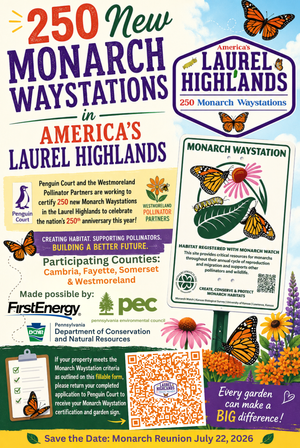
Penguin Court and the Westmoreland Pollinator Partners set a goal to certify 250 new Monarch Waystations in the Laurel Highlands in 2026 to honor the nation’s 250th anniversary.
Monarch Waystations are habitats that support monarch butterflies in all of their life stages from caterpillars that can only consume milkweed plants to adults that feed on nectar-filled flowers. The Laurel Highlands include Cambria, Fayette, Somerset, and Westmoreland Counties. Those who wished to participate had to have property in one of these four counties that meets the criteria on the application, such as providing host and nectar plants for monarchs and having sustainable management practices. Completed applications were then sent to mreckner@brandywine.org.
Once reviewed and approved, participants received a certificate and metal sign at no cost.
A number of Garden Club of Johnstown members applied for the designation.
Nancy Wojno went above and beyond! She was quite excited to monitor her property and observe the transformation up close from egg to caterpillar to chrysalis to butterfly.
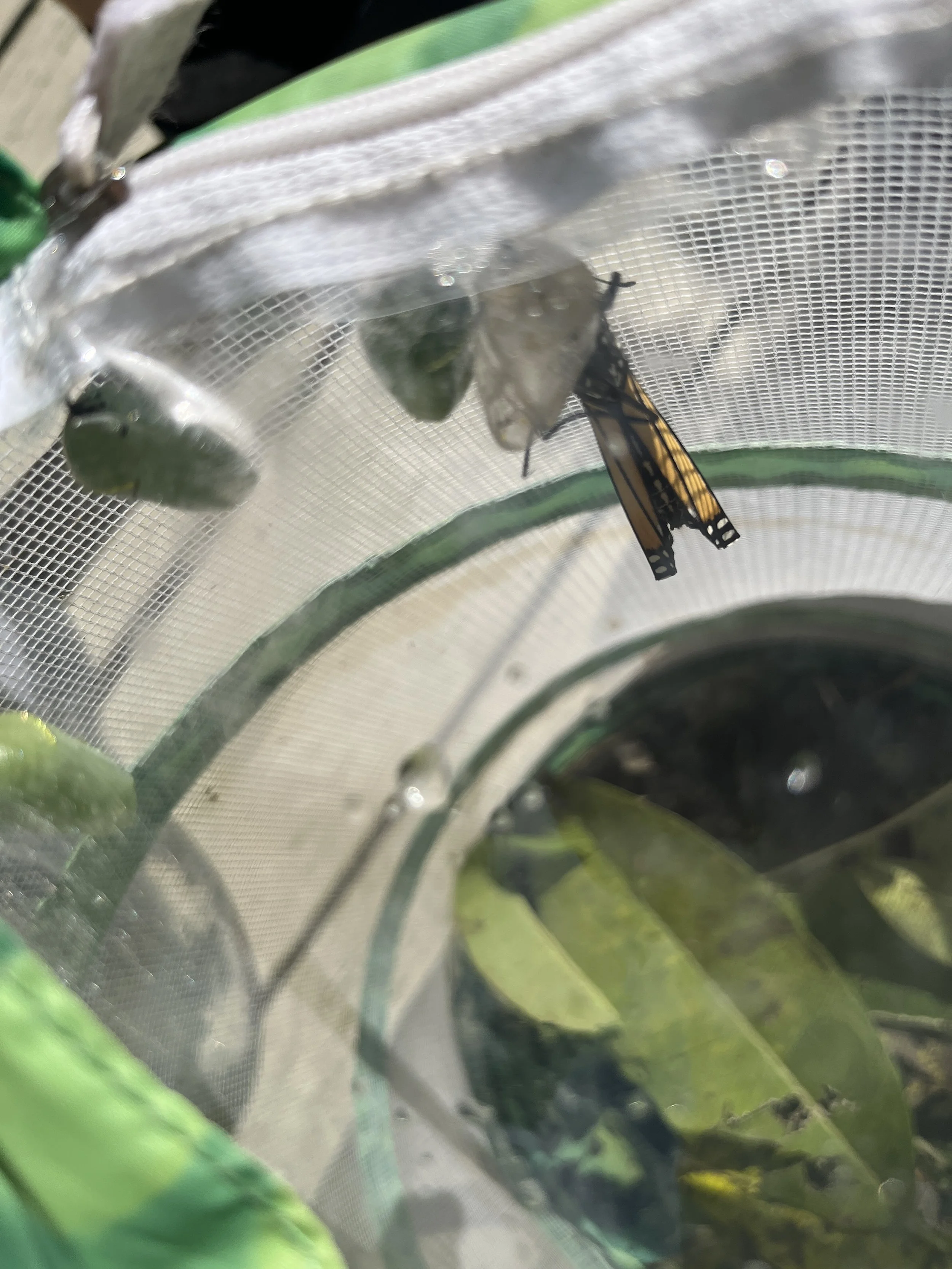
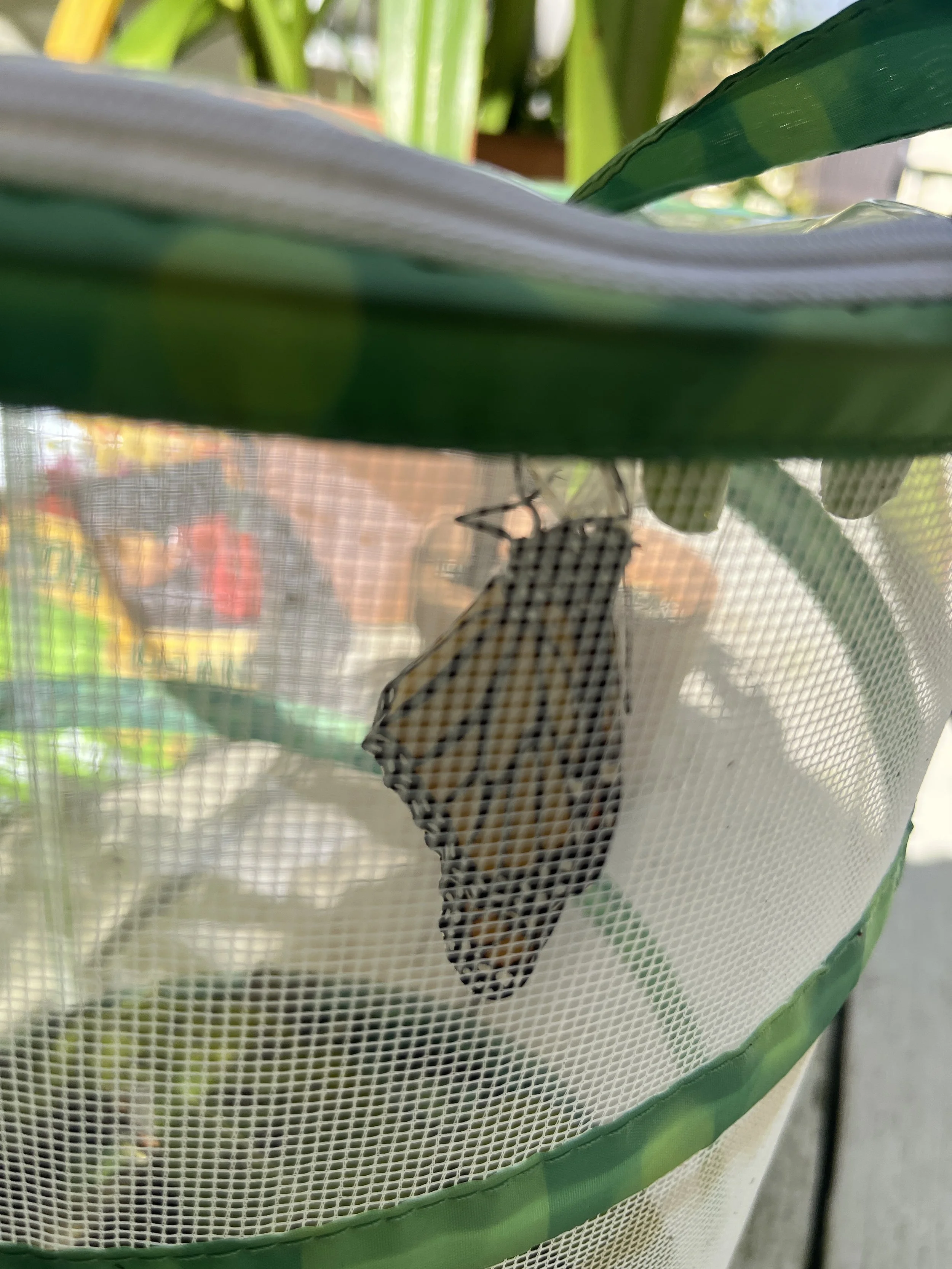
Look closely at these first group of pictures. Attached to the netting are two green chrysalises of the monarch and a third one as the adult butterfly is coming out. Note the milkweed leaves in the bottom of the cage that the eggs were attached to. As the eggs hatched, the caterpillars emerged and ate the milkweed leaves. The monarch larvae (caterpillars) only eat plants in the milkweed genus (Asclepias).
The adult butterfly is clearly noticable in the other picture.
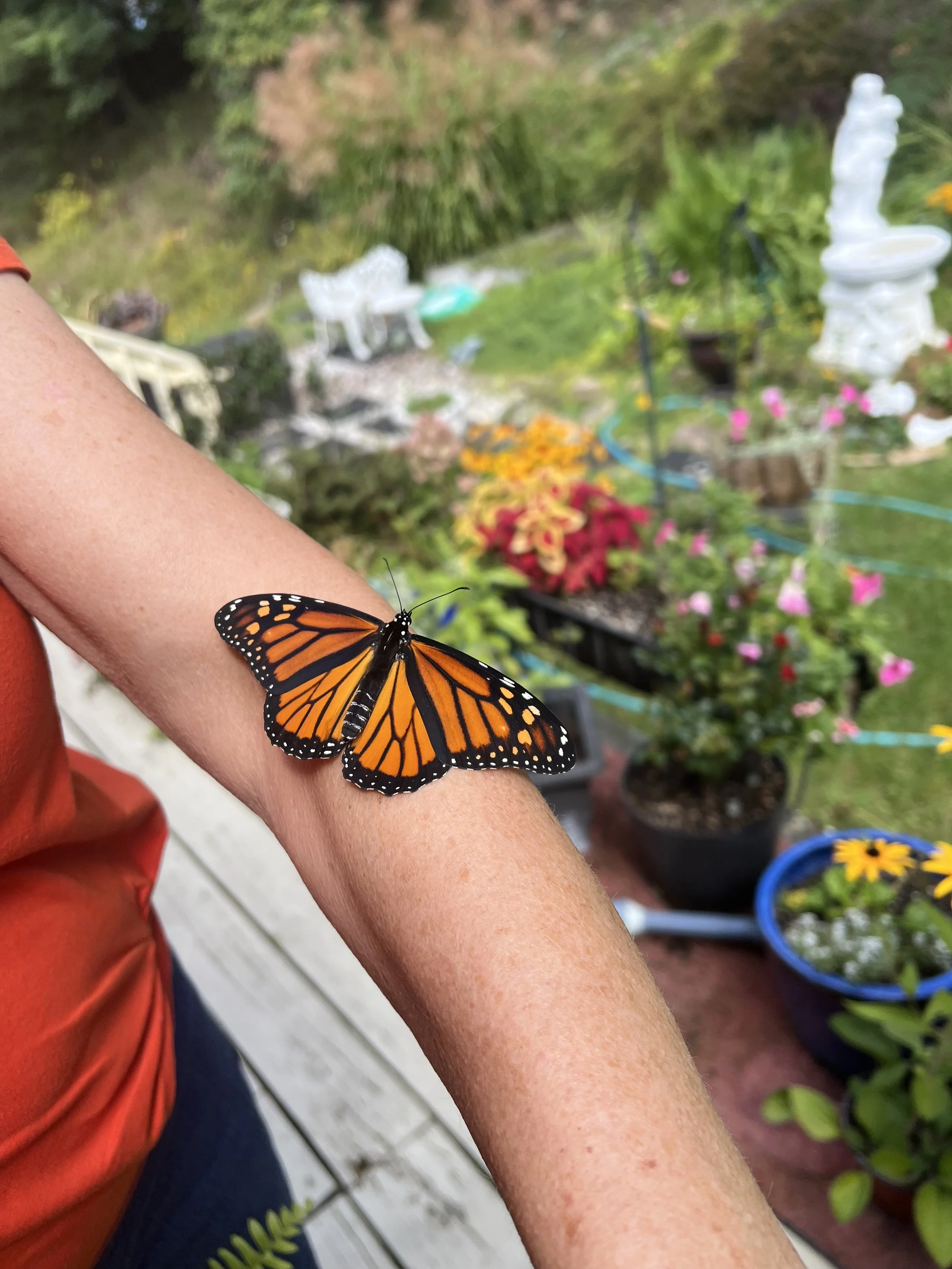
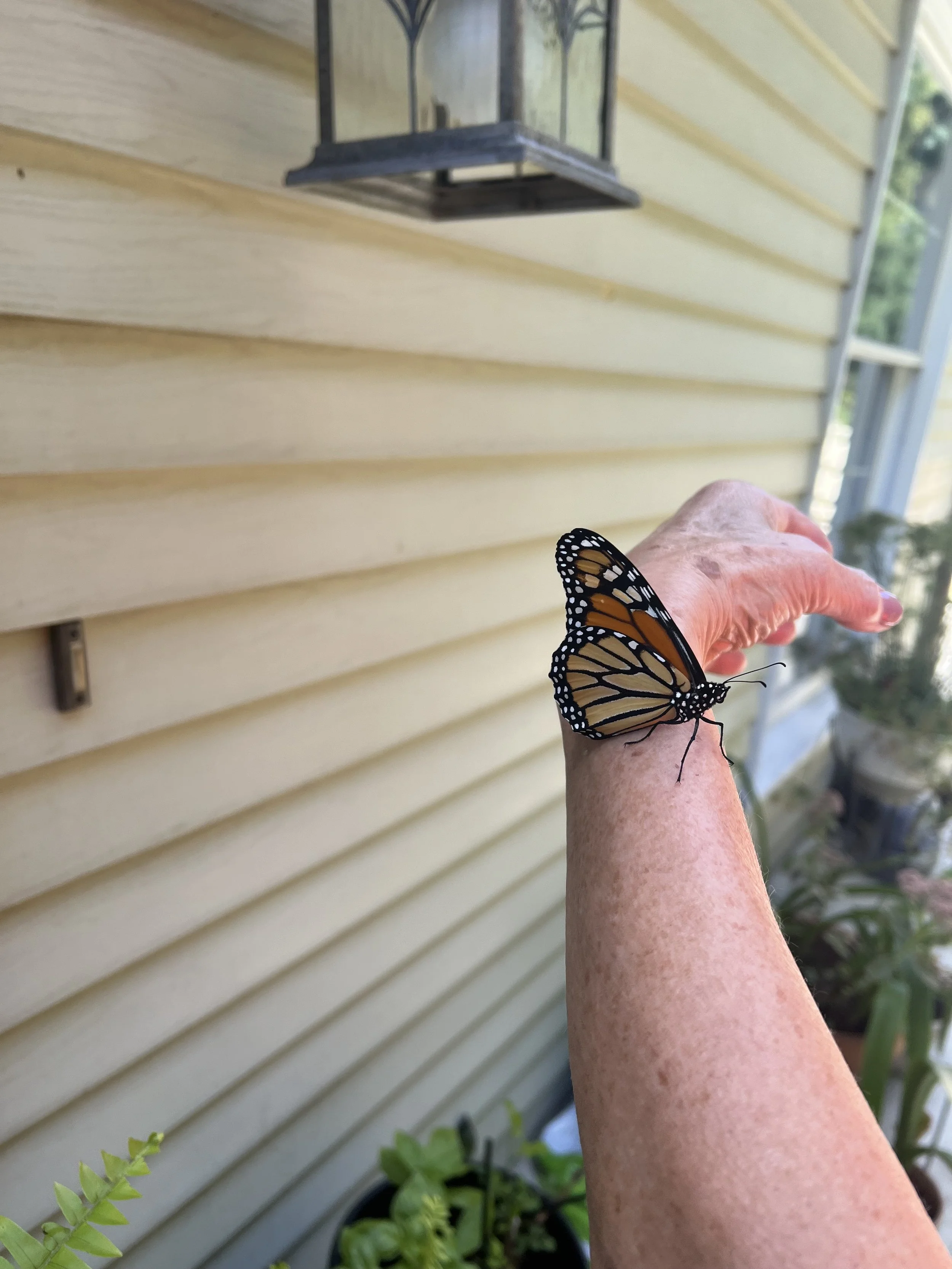
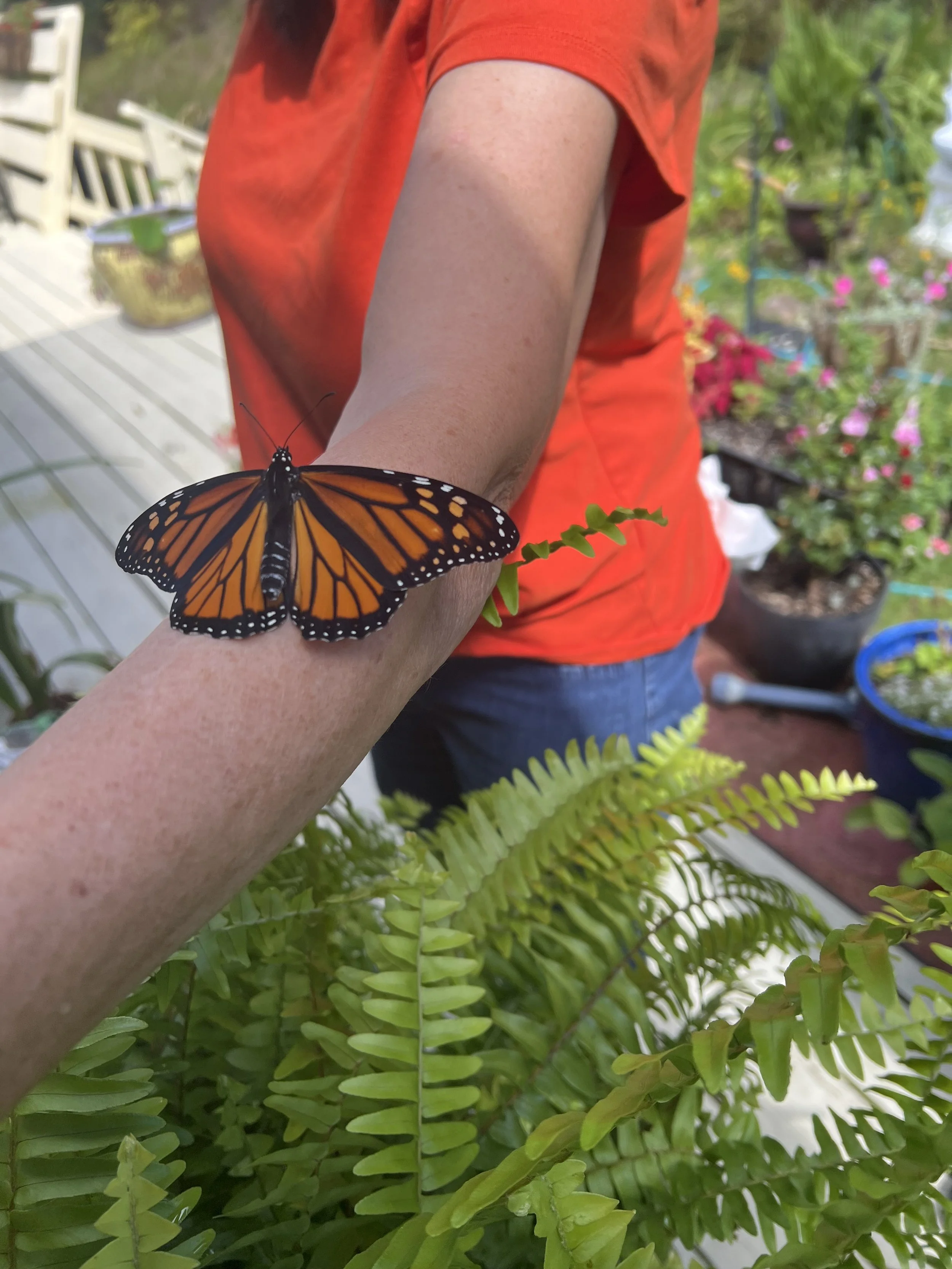
The goal of the program is to have the female monarchs lay their eggs on the milkweed leaves (host plants). Other nectar plants are used by the adult butterflies to provide nourishment on their journey south. In Pennsylvania they fly south and southwest toward the mountains forests of central Mexico.
Nancy has a last look at the butterflies before they start their journey.